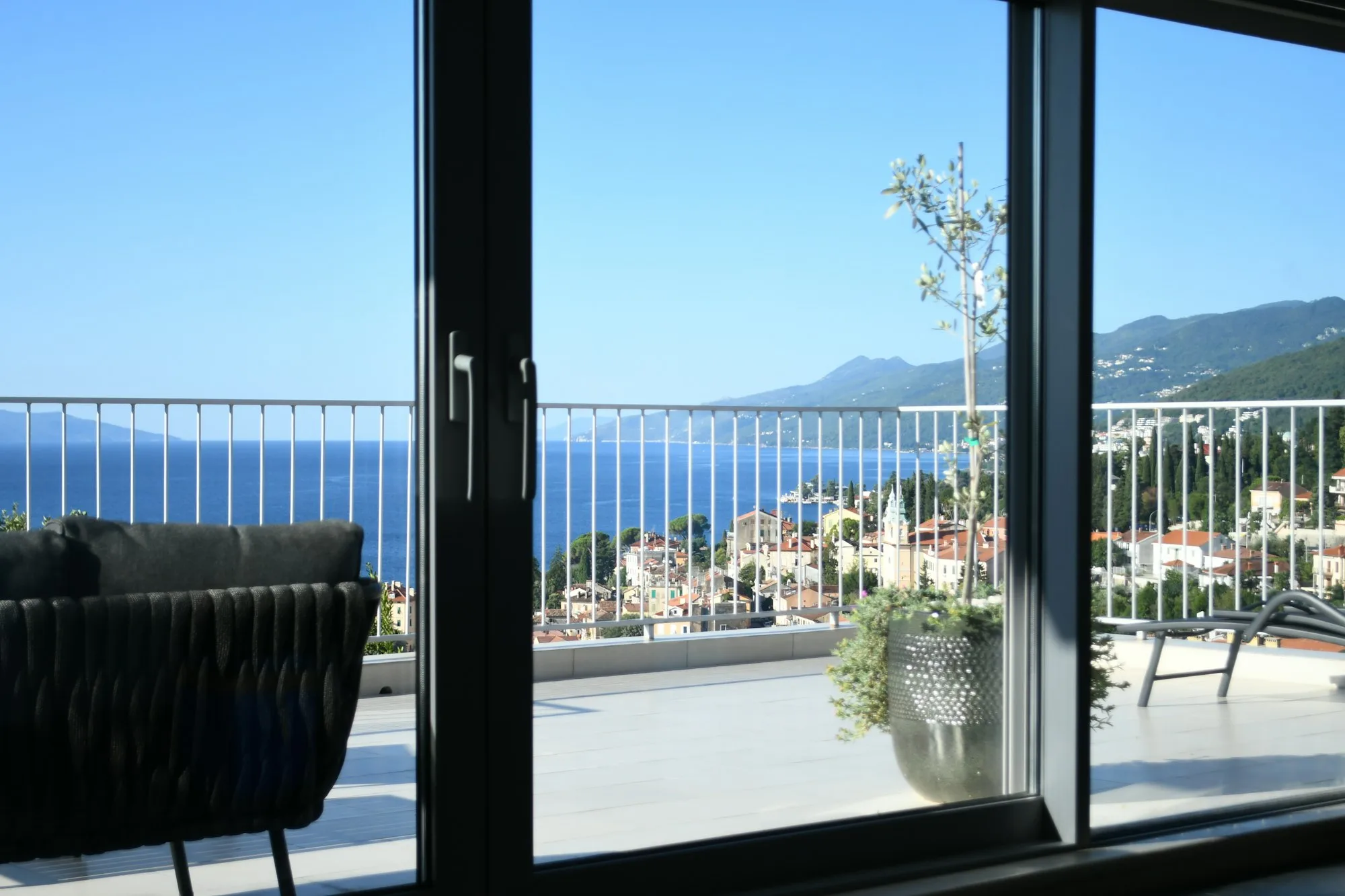
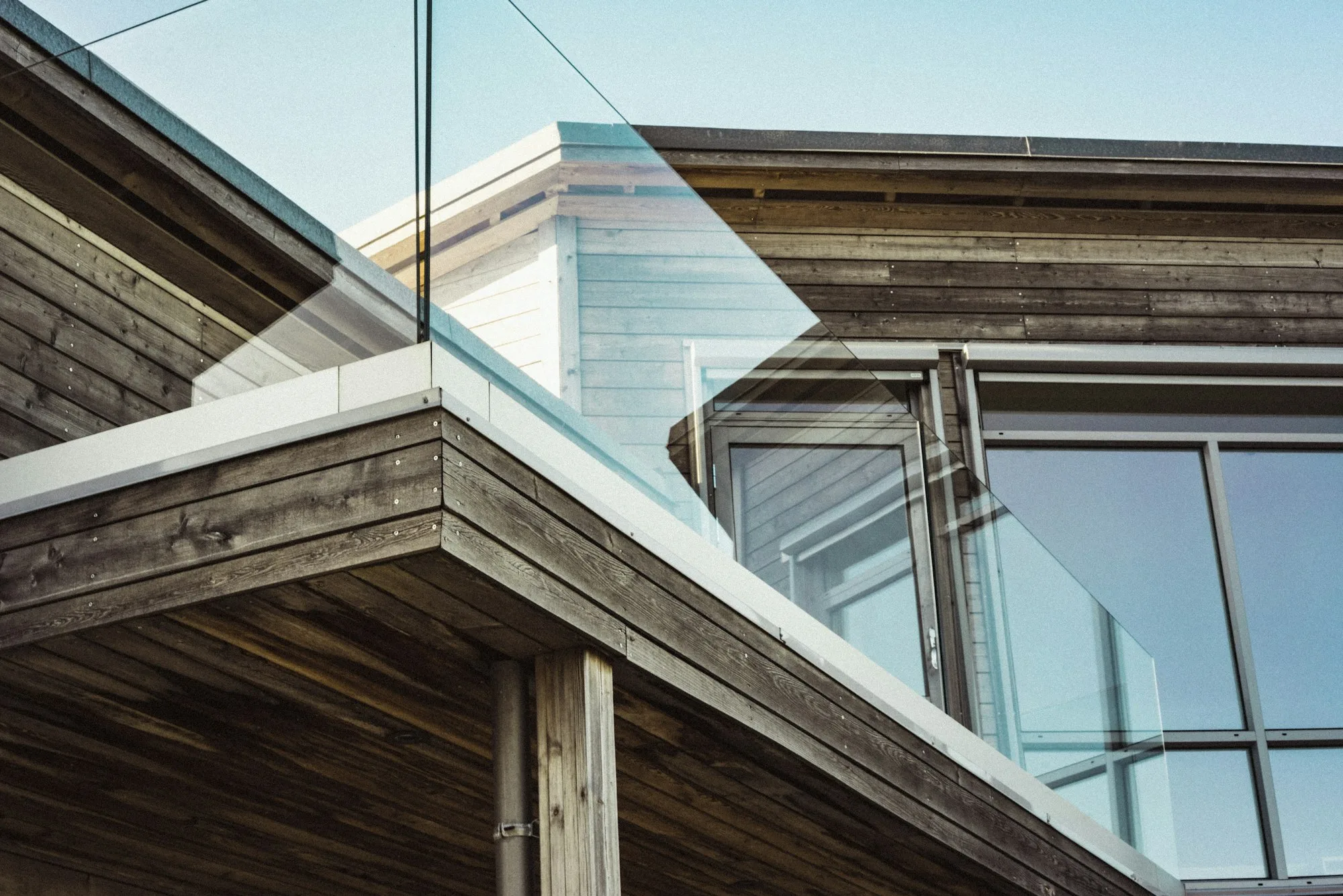
Double-glazed panels and insulated profiles turn the balcony into a four-season living space, with clearly less heat loss and condensation than single-glazed systems.
A double-glazed glass balcony is a folding system that uses insulating glass units — two panes with dry air or argon gas between them — together with thermally broken aluminium profiles. Single-glazed systems protect the balcony from wind and rain; a double-glazed system also cuts heat loss and turns the balcony into a room you can use in winter.
Does a glass balcony insulate?
This is the question we hear most. A single-glazed balcony creates an air buffer so your living-room windows are not directly exposed to cold air, but it is not a true insulation system. A double-glazed glass balcony provides a real insulating layer thanks to the double glazing, thermally broken profile and double seals. With Low-E coated glass, less indoor heat escapes in winter and less solar heat enters in summer.
Advantages
A warmer balcony in winter and a cooler one in summer
Less misting and condensation on the glass
Noticeably lower traffic and wind noise
More balanced temperature between living room and balcony, with potential heating savings
Still folds fully open in summer
Who is it for?
Ideal for people who want to use the balcony as a work corner, winter garden or play area, and for north-facing, windy upper floors and seaside flats. In apartment blocks we review management approval and facade rules under condominium law with you during the survey.
What affects the price
Prices depend on the glass unit build-up (e.g. 4+12+4 or 5+14+5), Low-E or solar control coating, argon filling, profile colour, number of corners and floor height. As the panels are heavier than single glass, the choice of track and carriers also affects the price. Use the price calculator for an estimate or get a quote for the final figure.
Maintenance
The cavity between the panes is sealed, so it never gets dirty inside; only the outer faces need wiping. Checking the seals once a year, keeping tracks clean and lubricating the wheels with silicone preserves the insulation performance.
Key features
Insulating glass unit with optional argon filling
Thermally broken aluminium profile
Low-E and solar control glass options
Double seals against wind and water
Clearly reduced condensation and misting
Panels that fold fully open in summer
10-year system warranty
How it is done
01
Survey and measuring
We measure the facade, wind exposure and floor level on site.
02
Glass unit selection
We choose the glass build-up and Low-E coating together based on your use.
03
Written quote
We send the price per m², profile colour and accessories in detail.
04
Production
Insulating glass units and thermally broken profiles are made to your measurements.
05
Installation and sealing
Tracks are fixed, panels fitted and all joints sealed.
06
Handover
Sealing and opening tests are carried out and the warranty certificate is issued.
“The surveyor saw our balcony was windy and recommended 10 mm glass, with a written price. Installation took one day and we felt the difference on the first cold days.”
Ayşe K., Kadıköy
Frequently asked
Does a glass balcony provide thermal insulation?+
Standard single-glazed systems block wind, rain and dust and make the balcony usable in shoulder seasons, but they do not provide true thermal insulation. If you need real insulation, choose a double-glazed glass balcony: the air or gas gap between the panes and an optional Low-E coating significantly reduce heat loss. Seal and gasket quality and installation workmanship also have a direct effect on the result.