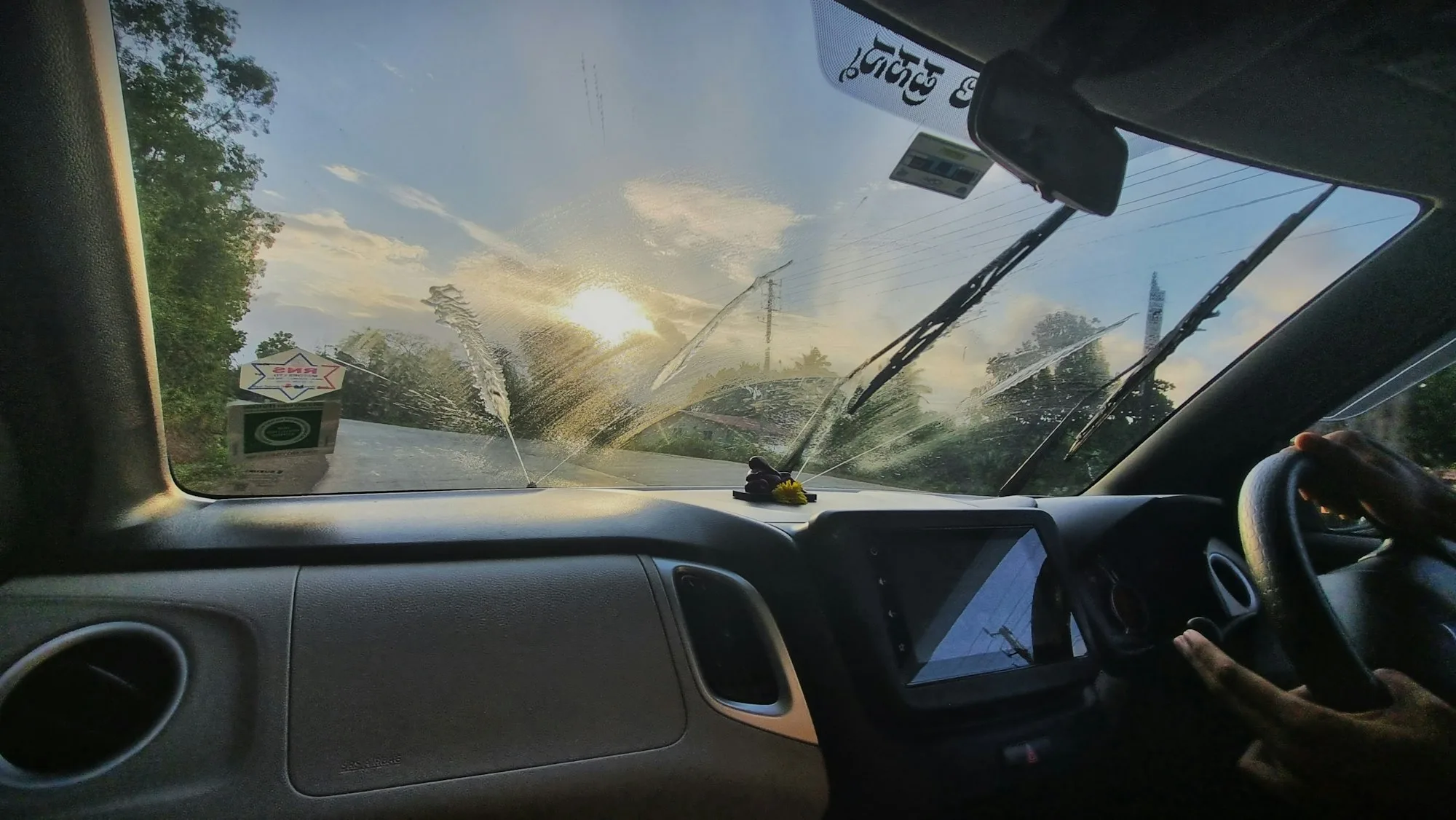
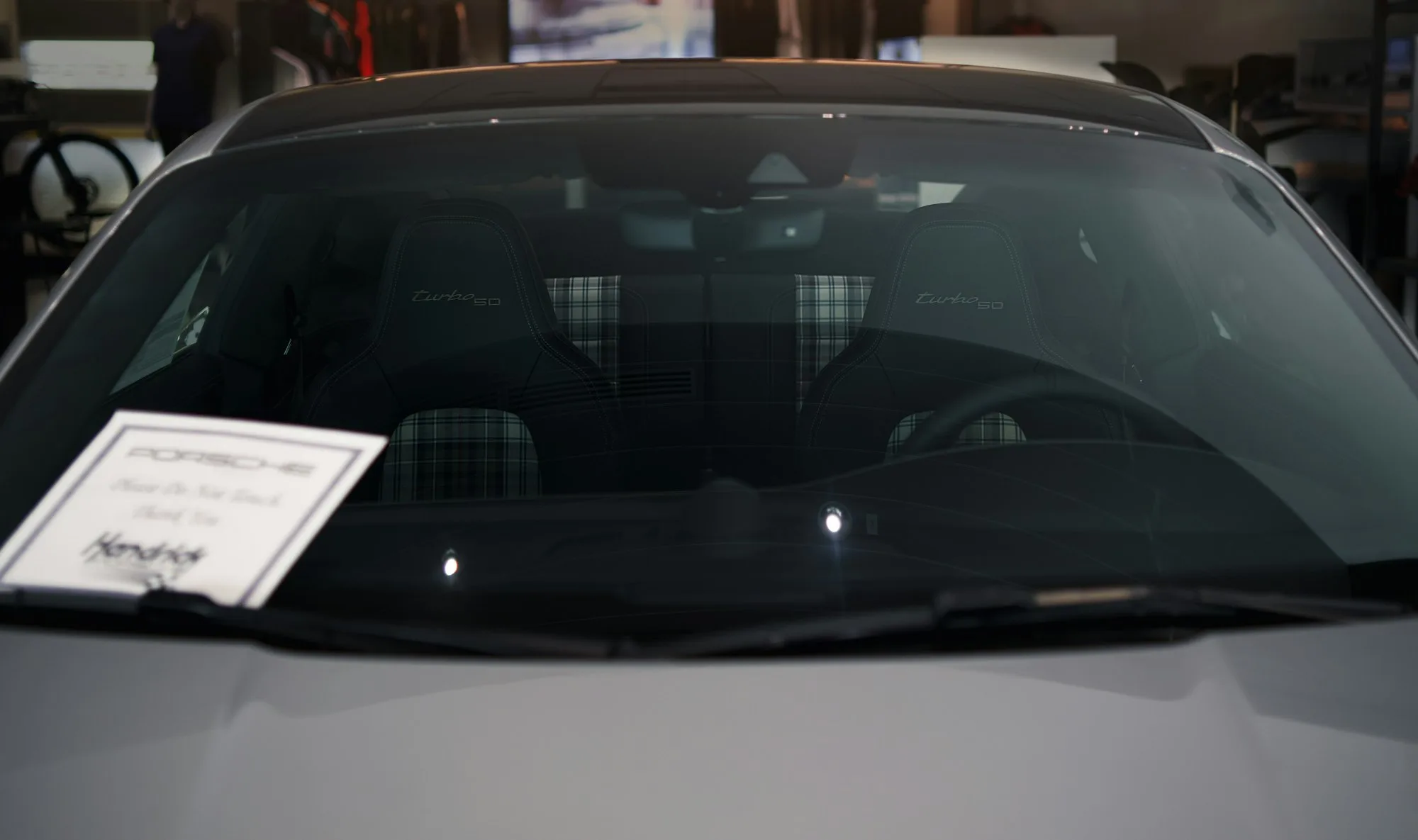
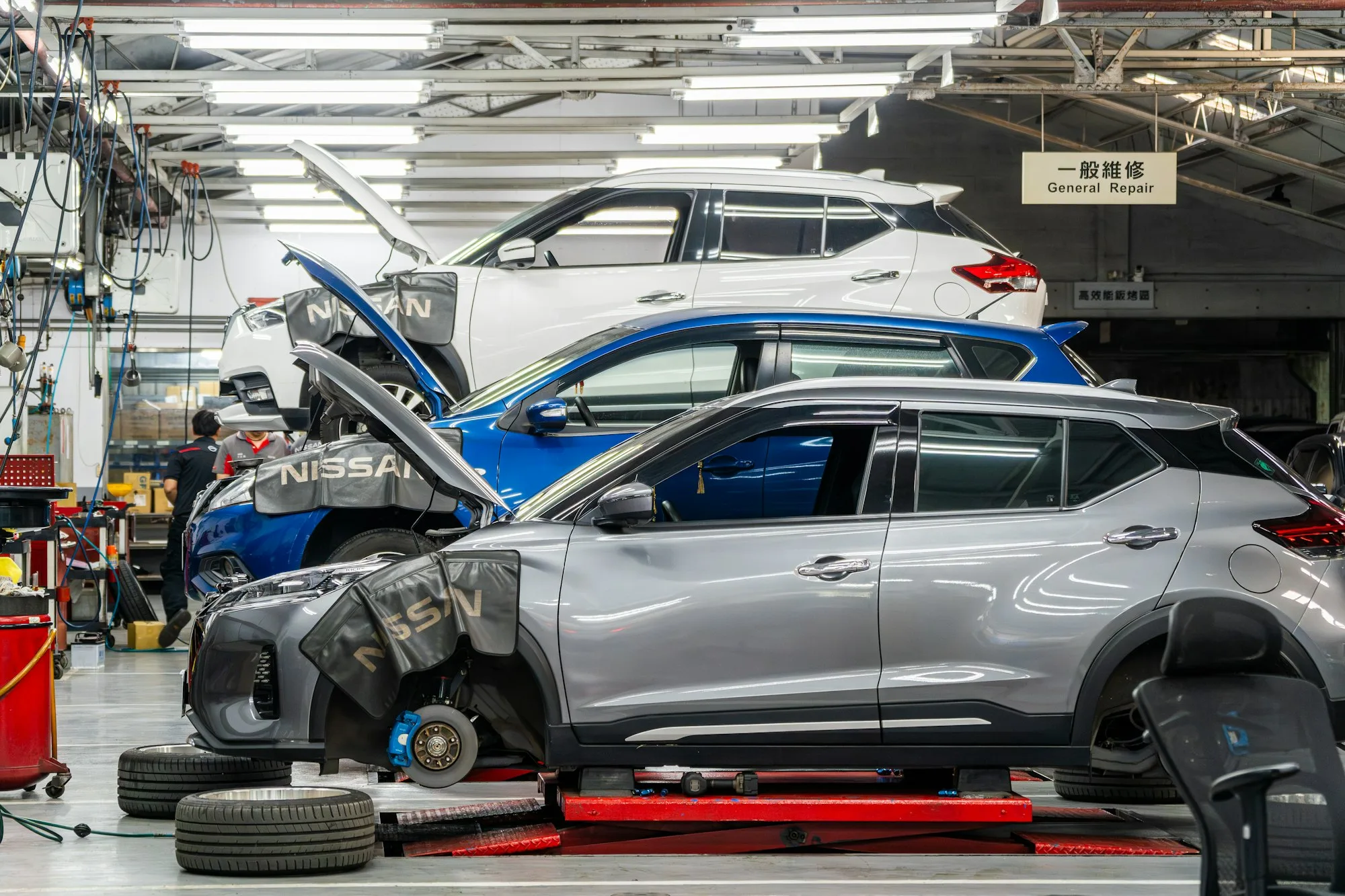
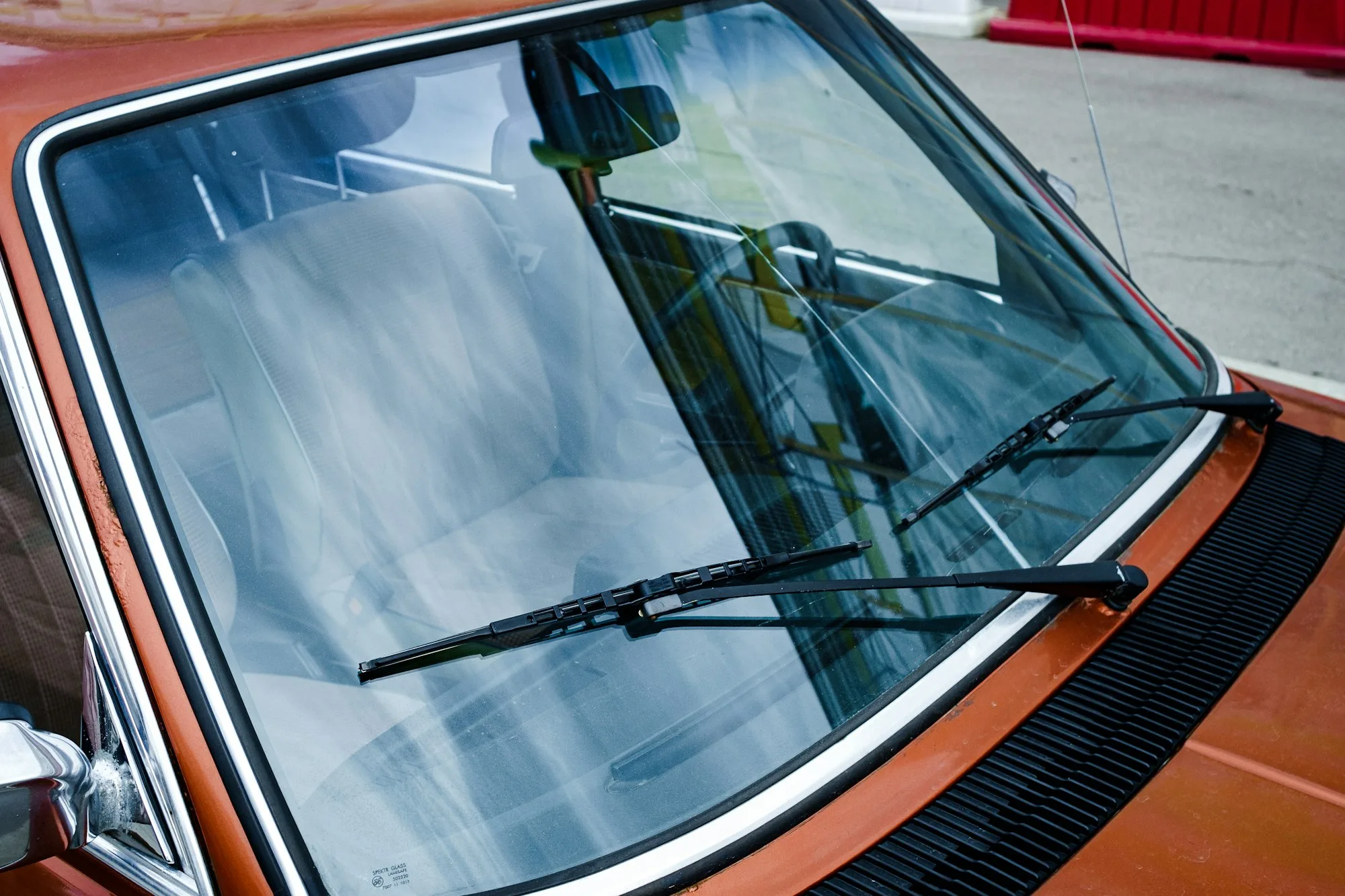
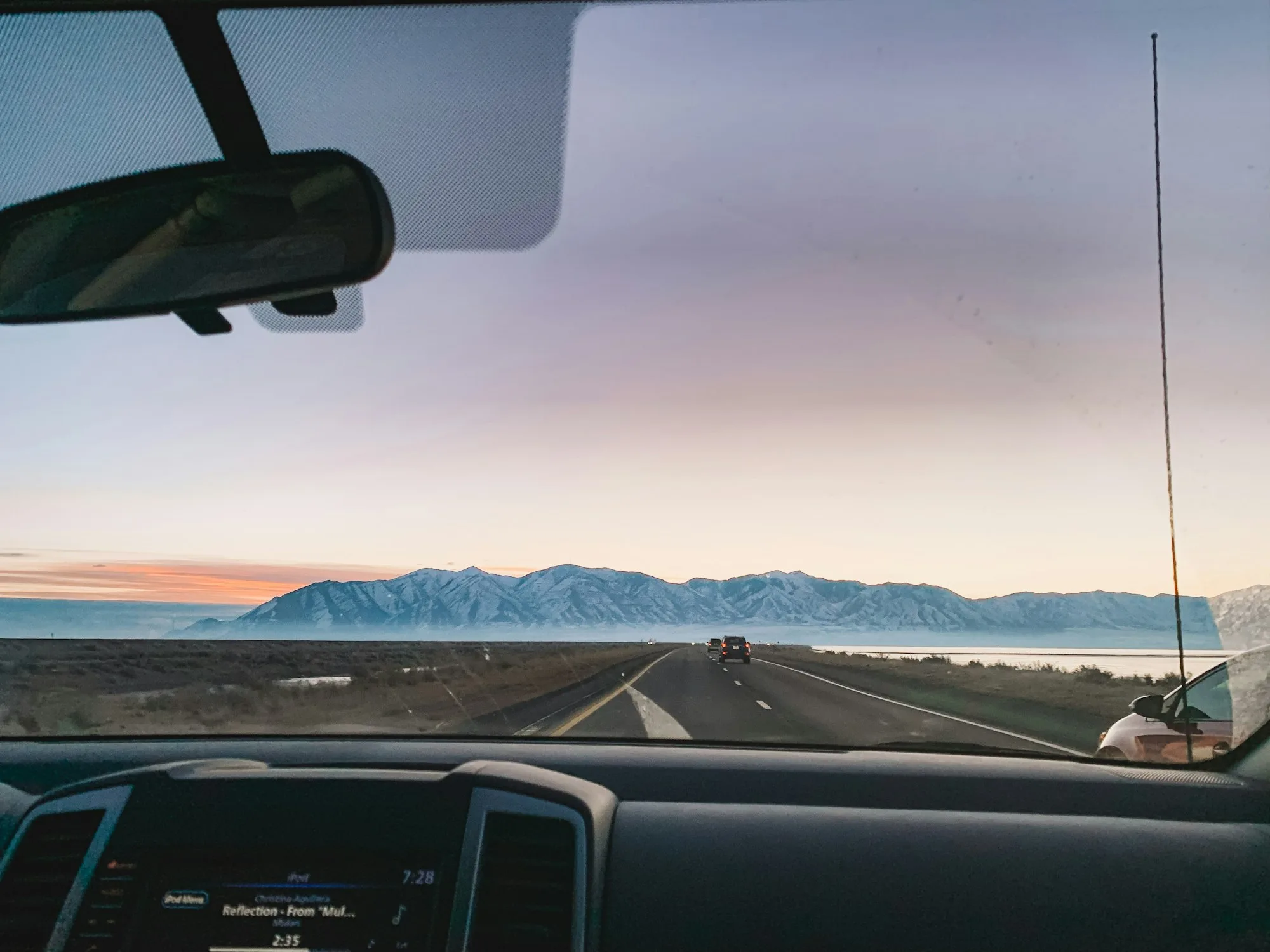
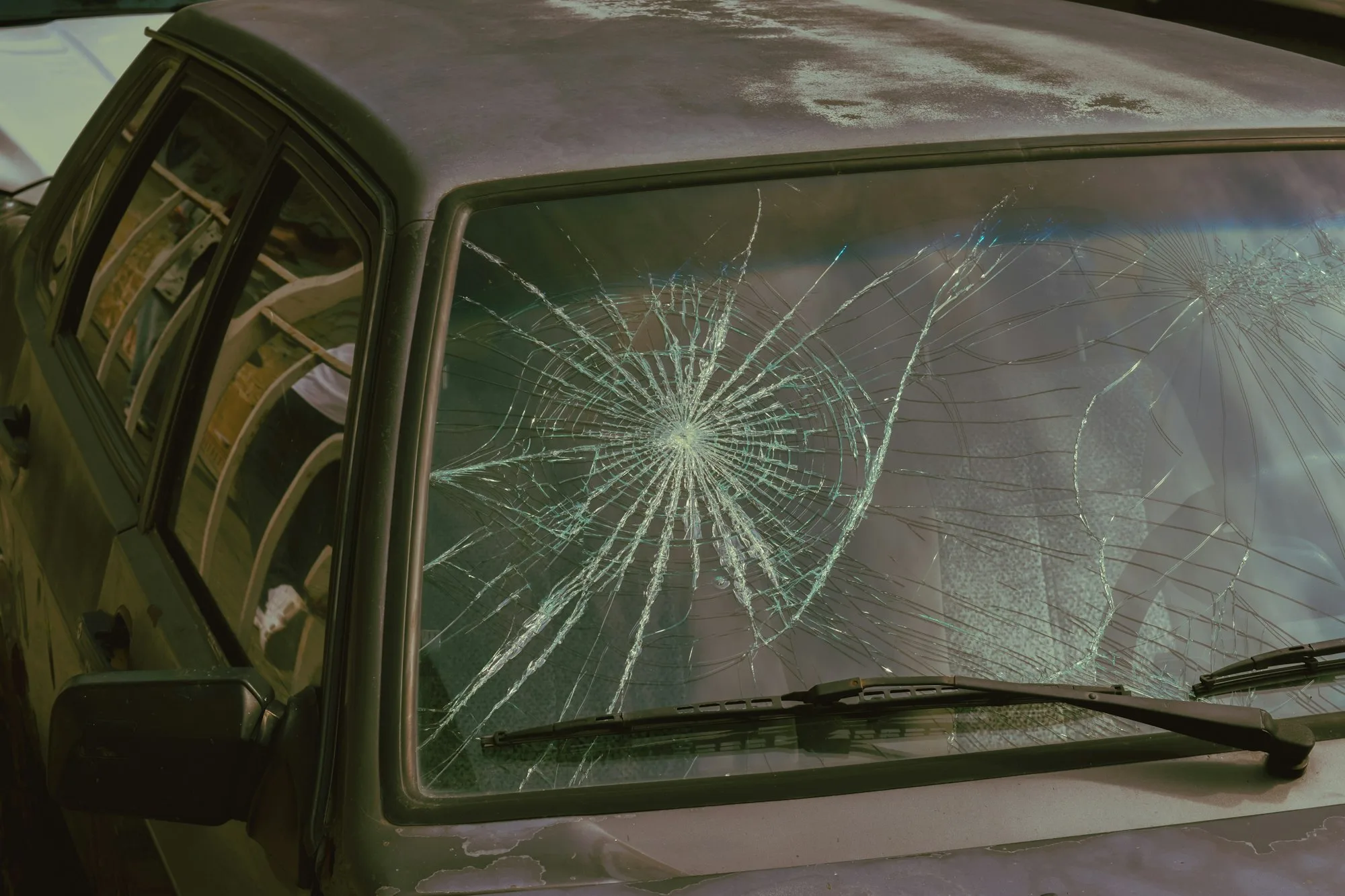
After a windscreen replacement we calibrate the camera for lane-keeping, emergency braking and traffic-sign recognition to manufacturer values using static or dynamic methods, and hand over a report.
ADAS (Advanced Driver Assistance Systems) is the umbrella term for lane-keeping assist, autonomous emergency braking, adaptive cruise control, traffic-sign recognition and high-beam assist. Many of these rely on a camera mounted at the top centre of the windscreen. When the windscreen is replaced, the bracket position and the optical properties of the glass can change by millimetres. Windscreen camera calibration resets the camera's viewing angle to manufacturer values.
Static and dynamic calibration
Static calibration: the car is placed on level ground with target boards at the distance set by the manufacturer and calibrated with a diagnostic tool.
Dynamic calibration: with the diagnostic tool connected, the car is driven at a set speed on a road with clear lane markings and the camera re-learns.
Some models require both. We determine the method from your vehicle data.
Advantages
Lane-keeping and emergency braking engage at the right moment
ADAS warnings on the dashboard are cleared
Report with before/after values
Done in the same appointment as the windscreen replacement
Who is it for?
Every car with a windscreen camera, i.e. lane-keeping or emergency braking. Calibration after a windscreen replacement is essential on camera-equipped cars: an uncalibrated camera may brake unnecessarily or fail to warn when needed. Calibration may also be required after wheel alignment, suspension work or front bumper repair. See car glass brands for brand-specific information.
What affects the price?
Required method (static, dynamic or both)
Number of cameras and radars
Manufacturer target boards and software access
Whether it is done with a windscreen replacement; it may be covered by insurance depending on your policy
After calibration
Watch that lane-keeping warnings work normally on your first drives. If the ADAS warning light comes on, call us; the check is free. Use the quote form to book.
Key features
Static (target board) calibration
Dynamic (road drive) calibration
Fault code reading and clearing with a diagnostic tool
Lane-keeping, emergency braking and traffic-sign cameras
Calibration report
Same appointment as windscreen replacement
How it is done
01
Vehicle data
The required calibration method is determined by model and equipment.
02
Pre-check
Tyre pressure, fuel level and load are set to manufacturer conditions.
03
Diagnostics
The diagnostic tool is connected and stored ADAS fault codes are read.
04
Calibration
Static calibration with target boards and/or dynamic calibration on the road.
05
Verification and report
Systems are tested, fault codes cleared and a report is handed over.
“After a windscreen change elsewhere, my lane warning showed an error. They calibrated it and the problem was solved.”
Burak Y., Beylikdüzü
Frequently asked
Is ADAS calibration needed after windscreen replacement?+
If your car has a windscreen-mounted camera for lane keeping, emergency braking, traffic sign recognition or adaptive cruise control, yes. When the glass is replaced the camera angle can shift by fractions of a millimetre and the systems may misjudge distances. After replacement we perform static or dynamic calibration to manufacturer specifications and document the result. Check your car’s ADAS equipment by choosing make and model in our vehicle selector.