Car Glass Guides, , 5 min read
What is ADAS calibration and is it required after windscreen replacement?
Lane keeping, emergency braking and traffic sign recognition depend on the camera behind the windscreen. When the glass is replaced, the camera angle can shift by fractions of a millimetre. We explain what ADAS calibration is, static and dynamic methods and which cars need it.
By İKİZLER Teknik Ekip
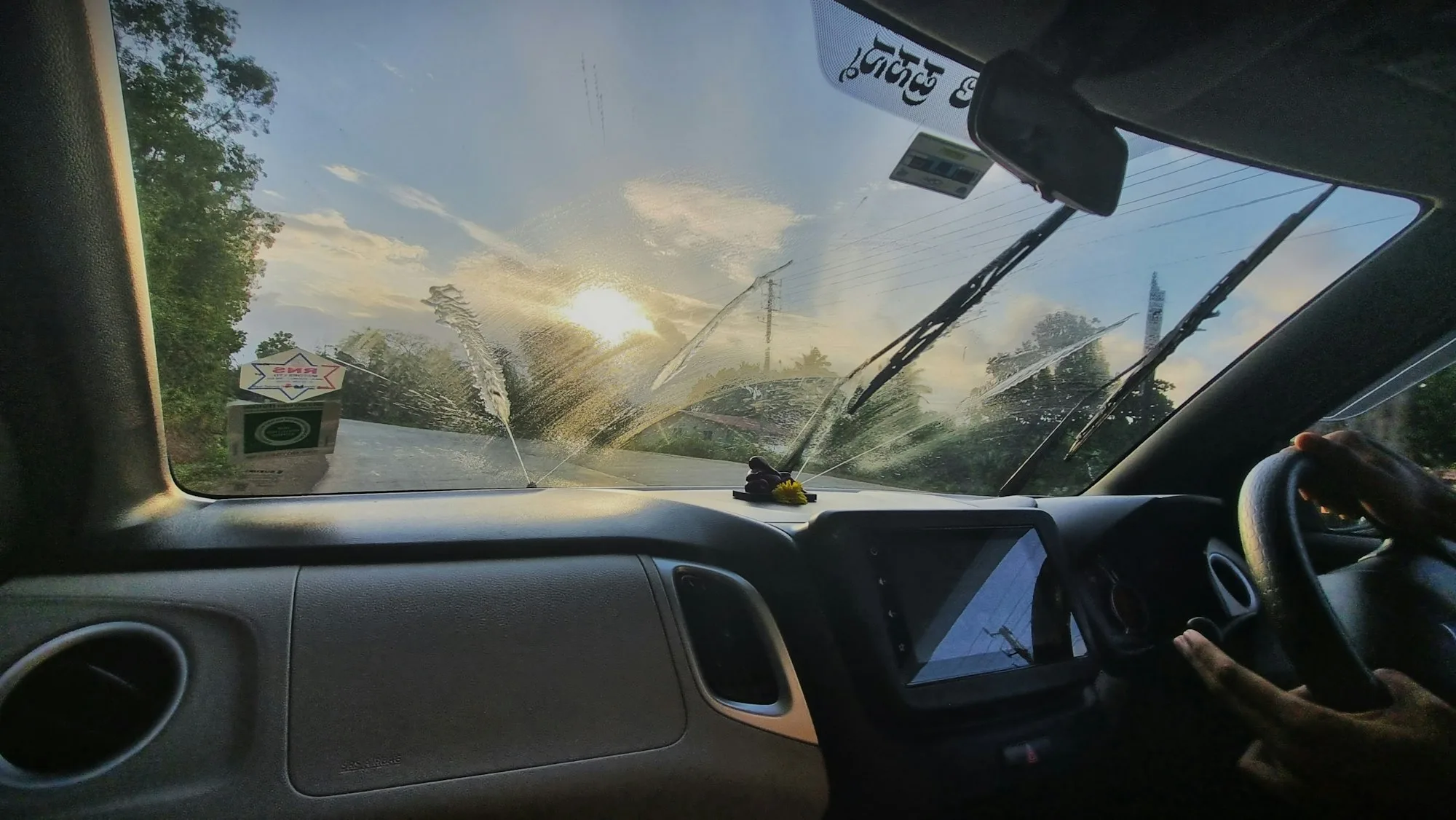
A large share of cars built in the last decade have a camera fixed to the windscreen behind the rear-view mirror. This camera is the eye of many systems that assist the driver. When the windscreen is replaced, the camera is refitted to the new glass and its position can change, even if only very slightly. This is where ADAS calibration comes in.
What is ADAS?
ADAS stands for Advanced Driver Assistance Systems. The main systems that use the windscreen camera are:
- Lane departure warning and lane keeping: Detects road markings, warns you when the car drifts out of its lane or gently steers it back.
- Autonomous emergency braking: Detects a vehicle, pedestrian or cyclist ahead and helps brake when there is a risk of collision.
- Traffic sign recognition: Reads signs such as speed limits and no-overtaking zones and shows them on the dashboard.
- Automatic high beam: Detects oncoming traffic and dips the high beams automatically.
- Adaptive cruise control: Works together with radar to keep a safe distance from the car ahead.
These systems work correctly only if the camera sees the road at exactly the angle defined by the manufacturer.
Why is calibration needed?
The camera is attached to the windscreen with a bracket. When new glass is fitted, the bracket position, the rake of the glass and its optical properties can differ very slightly. Even a one-degree deviation can make the camera place an object tens of metres ahead in the wrong position. As a result, the lane warning may come too late, emergency braking may trigger unnecessarily or fail to work when needed.
Calibration means introducing the camera’s new position to the car’s computer and resetting its field of view to the manufacturer’s values.
Static and dynamic calibration
Depending on the manufacturer and model, two main methods are used:
- Static calibration: In the workshop, on level ground, target boards are placed in front of the car at a specified distance and height. Calibration mode is started with a diagnostic tool and the camera is aligned to these targets. Lighting and floor levelness must be controlled.
- Dynamic calibration: With the diagnostic tool connected, the car is driven for a while within a certain speed range on a road with clear markings. The camera calibrates itself using real road data.
Some cars need only one method, others both. The correct method is determined from the vehicle’s service information.
Which cars need it?
Any car with a camera on the windscreen is a candidate for calibration. For example, on new-generation Togg models, Volkswagen’s latest hatchbacks and SUVs or Renault’s current models with lane keeping and emergency braking, the camera is mounted on the windscreen. Even within the same model, the camera may or may not be present depending on the trim.
The easiest way to check is to look behind the rear-view mirror. If you see a black module against the glass, your car most likely has an ADAS camera. You can also get information by selecting your make and model on our car glass brands page.
What happens if calibration is skipped?
- An ADAS fault warning may appear on the dashboard.
- The systems may switch themselves off.
- More dangerously, the system appears to work but measures incorrectly.
The last case is the hardest for the driver to notice. That is why we do not consider a windscreen replacement on a camera-equipped car complete without calibration.
How does the process work?
- The vehicle details and trim are checked.
- The windscreen replacement is carried out with adhesive that meets manufacturer standards.
- The adhesive’s safe drive-away time is observed.
- The camera bracket and connections are checked.
- Static and/or dynamic calibration is performed.
- Fault codes are cleared with the diagnostic tool, the systems are tested and the result is reported.
See our ADAS calibration service page for details.
Does insurance cover calibration?
On camera-equipped cars, calibration is a technical part of the glass replacement, so in most cases it can be included in the glass claim. The exact cover depends on the policy and the insurer’s approval. We describe the claim process in our insurance glass replacement step by step article.
Conclusion
ADAS calibration is a short but critical step that makes sure driver assistance systems work correctly after a windscreen replacement. If your car has a windscreen camera, plan the calibration together with the replacement. Fill in the quote form for an appointment and price, or visit our frequently asked questions page for other topics.
Tags
- adas
- kalibrasyon
- ön cam değişimi
- sürüş destek
Updated: